Uptime Is a Patient-Safety Metric, Not Just an Ops Number
For dialysis equipment training, downtime can mean delayed care. BiomedRx treats reliability as a clinical priority for Alaska facilities in Alaska.
Source: FDA — Dialysis ↗
Everything BiomedRx publishes on dialysis equipment training alaska in Alaska in one place: the full service overview, the related services we provide, and the locations we cover.
Below is every page BiomedRx maintains for dialysis equipment training alaska in Alaska — the complete overview, the related services, and the surrounding locations our technicians cover.
The most useful training covers what to do when something looks wrong: how to recognise a fault, what to stop doing, and who to call. That is the part that prevents a small problem from becoming an incident report.
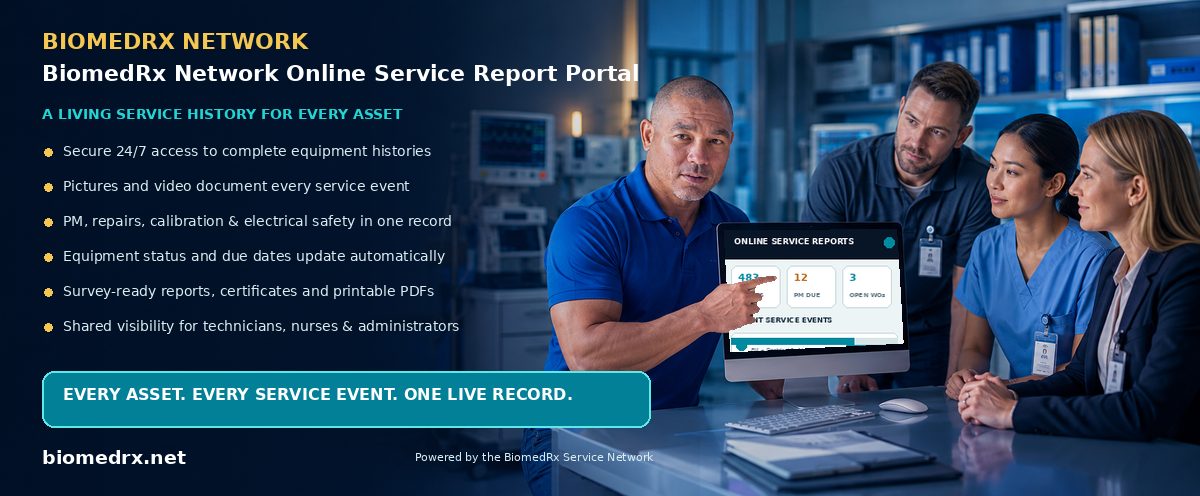
Every visit produces documentation an inspector can read without a translator: what was done, to what standard, by whom, and when it is next due.
Competency has to be documented to count. Who was trained, on what, by whom, and when they were reassessed — that record is a compliance artefact as much as an educational one.
Facilities in Alaska run the same equipment as anywhere else and face the same standards, so the difference a local provider makes is response time and familiarity rather than any special technique.
A first visit starts with what is already on site: an inventory that matches reality, the service history that exists, and an honest read on which devices are worth continued investment. Nothing useful gets planned from a list nobody has verified.
A complete equipment history changes capital planning from an argument into an evidence question. Departments that can show failure rates and repair spend per device get replacement budget; departments that cannot, do not.
If you are not sure which of these pages applies to your equipment, describe the situation and a technician will tell you what the work actually requires rather than what the largest quote would cover.
Current developments in dialysis equipment training in Alaska, with sources for further reading.