Turning Service Logs Into Savings: Data-Driven Hospital Equipment Service
Good records are more than paperwork — they reveal failure patterns. BiomedRx uses hospital equipment service history to cut surprises and extend asset life in Germany.
Everything BiomedRx publishes on hospital equipment service germany in Germany in one place: the full service overview, the related services we provide, and the locations we cover.
Use this page to find the exact hospital equipment service germany service you need in Germany. Everything BiomedRx publishes for this area is listed below, starting with the full overview.
The useful service relationship is one where the provider knows the fleet. A technician who has seen this device before diagnoses faster than one reading the history for the first time.
Technicians are qualified for the equipment they touch, and the qualification is on file rather than asserted.
Service covers the whole life of the device: commissioning, scheduled attention, fault response, and the honest conversation about when to stop spending on it.
Coverage in Germany is organised around getting a technician to the equipment quickly. Downtime is measured from when the device stopped, not from when the paperwork started.
Scope is written down before the work begins, including what is excluded. Most disputes about equipment service are really disputes about scope that nobody put in writing.
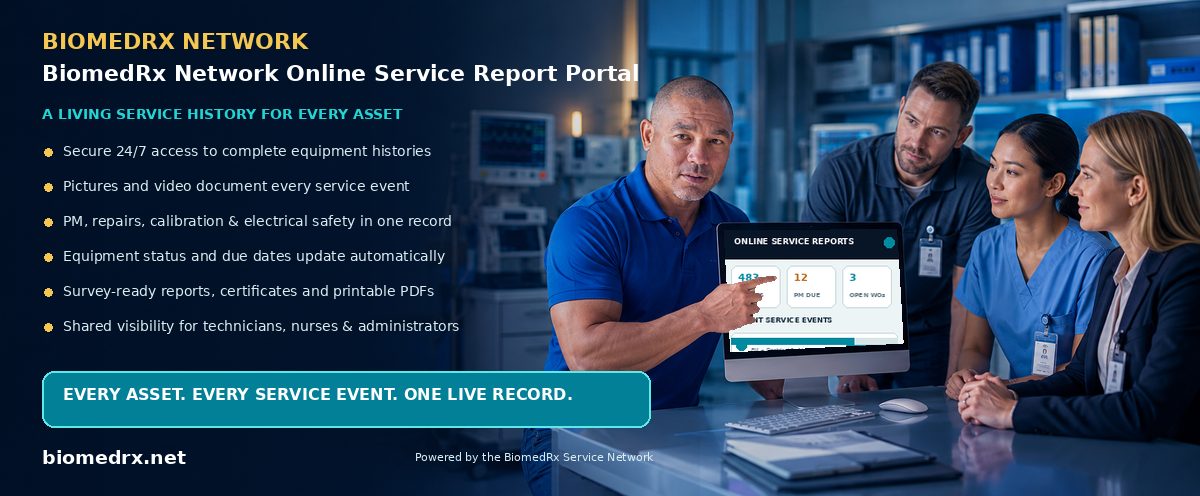
The documentation is not administrative overhead; it is the deliverable that outlives the visit. When an inspector, an insurer or a lawyer asks what condition a device was in on a particular date, the record is the entire answer, and a facility either has it or does not.
If you are not sure which of these pages applies to your equipment, describe the situation and a technician will tell you what the work actually requires rather than what the largest quote would cover.
Current developments in hospital equipment service in Germany, with sources for further reading.
Primary regulations and standards referenced on this page. Where a standard is published commercially it is named in full rather than linked to a copy.